Words by Lisa Findley
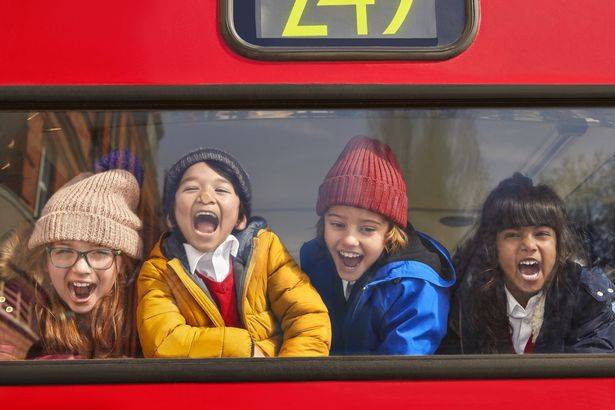
With only a few days left until children across the UK return to school, what have we learned about how children are coping, and how can parents help?
Staggered schedules, 2-metre bubbles, teachers wearing PPE – September is nearly here, and with it, a schooling experience unlike anyone in living memory has ever seen. Families are facing a monumental emotional and mental challenge in returning to school during a pandemic.
In the UK, we are in our fifth month of responding to the Covid-19 pandemic. Adults have had to juggle working from home and parenting, and children have had to cope with abruptly ending schooling, not seeing their friends for months, and waving hello to grandma on Zoom. Permeating all this is worry about contracting the virus, concern for loved ones who have it or have died from it, and stress about how long our lives will be upended in this way.
How Children Have Reacted to the Pandemic
One of the main responses from children has been an increase in anxiety, from the specific (what will it be like to return to school?) to the general. Parents may notice this increased anxiety taking the form of angry outbursts or disturbed sleep. Teenagers may engage in more risky behaviours like drinking excessively or self-harming. They may also develop eating disorders, which is often a way of attempting to control some part of life in a world that feels out of control.
How Parents Can Help Children Cope
Dr Lucy Russell, clinical psychologist and clinical director of Everlief Child Psychology, says that the main thing parents can do to help their children is to ‘offer increased nurture and understanding’. Spending time each day listening to what their child is thinking about will help parents monitor their child’s well-being, and if they notice any sudden deterioration, they should seek help from their GP.
 Listening is key, agrees Jane Teverson, who has worked as a counsellor for over twenty years. Also helpful is meditation or anything that helps to calm the mind in these stressful times. In terms of daily life, she recommends, ‘Keeping life simple with gentle, flexible routines gives structure that can have a stabilising effect.’
On Dr Russell’s parenting and wellbeing website They Are the Future, her article on lessons learned during lockdown includes the note that routines keep us mentally well. ‘Our brains generally like to know what is coming next; they can adapt, prepare, and in some cases look forward to the next activity’, she explains.
Going Back to a Different Kind of School Experience
School has its own rules, and even in schools that will be enforcing new distancing and other policies in response to the pandemic, there will be routines to follow.
Dr Russell is optimistic that children will be able to navigate these rules fairly easily, but advises that ‘the brain processes visual information much better than verbal information. If a child is struggling to understand new rules that come into force, it can be helpful to create a colourful poster using both words and pictures. The poster can be displayed in a prominent place and talked through regularly.’
Teverson agrees that although ‘it is often said that children are resilient, and they are, they shouldn’t have to be, so the transition back to school should be handled sensitively’. Children particularly anxious about returning to school will need an individualised plan worked out between parents and the school. Dr Russell’s TATF site recommends increasing downtime to help the child process the change, both at school and at home, as well as graded exposure to school, and quite likely some counselling or therapy.
Children returning to school will be exposed to children from families with varying approaches to avoiding Covid-19, and parents may want to go over these differences in advance so that children are not surprised. Dr Russell advises, ‘I would suggest that parents have regular chats with their children, trying to be non-judgmental, about why families might have different approaches to the pandemic. For example, a family shielding someone with a health condition is likely to be more risk-averse than a family who are all healthy.’
Parenting in the Ongoing Pandemic
The pandemic is not over yet, and there will no doubt be more adjustments that families need to make as conditions and policies change.
Teverson believes a compassionate parenting approach will be the most helpful. ‘Children learn by example’, she says, ‘so it follows that if parents model a calm acceptance of the situation, children will have a greater chance of feeling and acting the same. Our acceptance becomes the mirror for their acceptance of the situation.’
Simple things can go a long way to helping both parents and children cope with the changes. ‘Families need to prioritise the cornerstones of wellbeing such as sleep, healthy eating, exercise and quality time together’, says Dr Russell. ‘Many families are managing to do this and are thriving.’
Dr Lucy Russell is a clinical child psychologist and founder of Everlief Child Psychology in Buckinghamshire. She has two children aged fourteen and eleven. She is co-author of the book, “Brighter Futures: A Parents’ Guide to Raising Happy, Confident Children in the Primary School Years“. She also runs the parenting and wellbeing website They Are The Future.
Jane Teverson has worked as a counsellor for over twenty years. She is the author of the book “Born Beautiful: How Counselling Theory Can Enrich Our Parenting“, which will be published by Free Association Books in November. Her initial training was in Person Centred Counselling but, because of an interest in unconscious processes, she gained her accreditation in Psychodynamic Counselling. Both disciplines informed her work.
 If your a gentleman over the age of 30, the likelihood is you are familiar with the casual wear brand Farah. But are you so familiar with its heritage and what they have been up to more recently ?
  It made workwear, so knows a thing or two about well constructed, durable clothing. Quickly gaining a reputation for producing quality goods the business had expanded.
 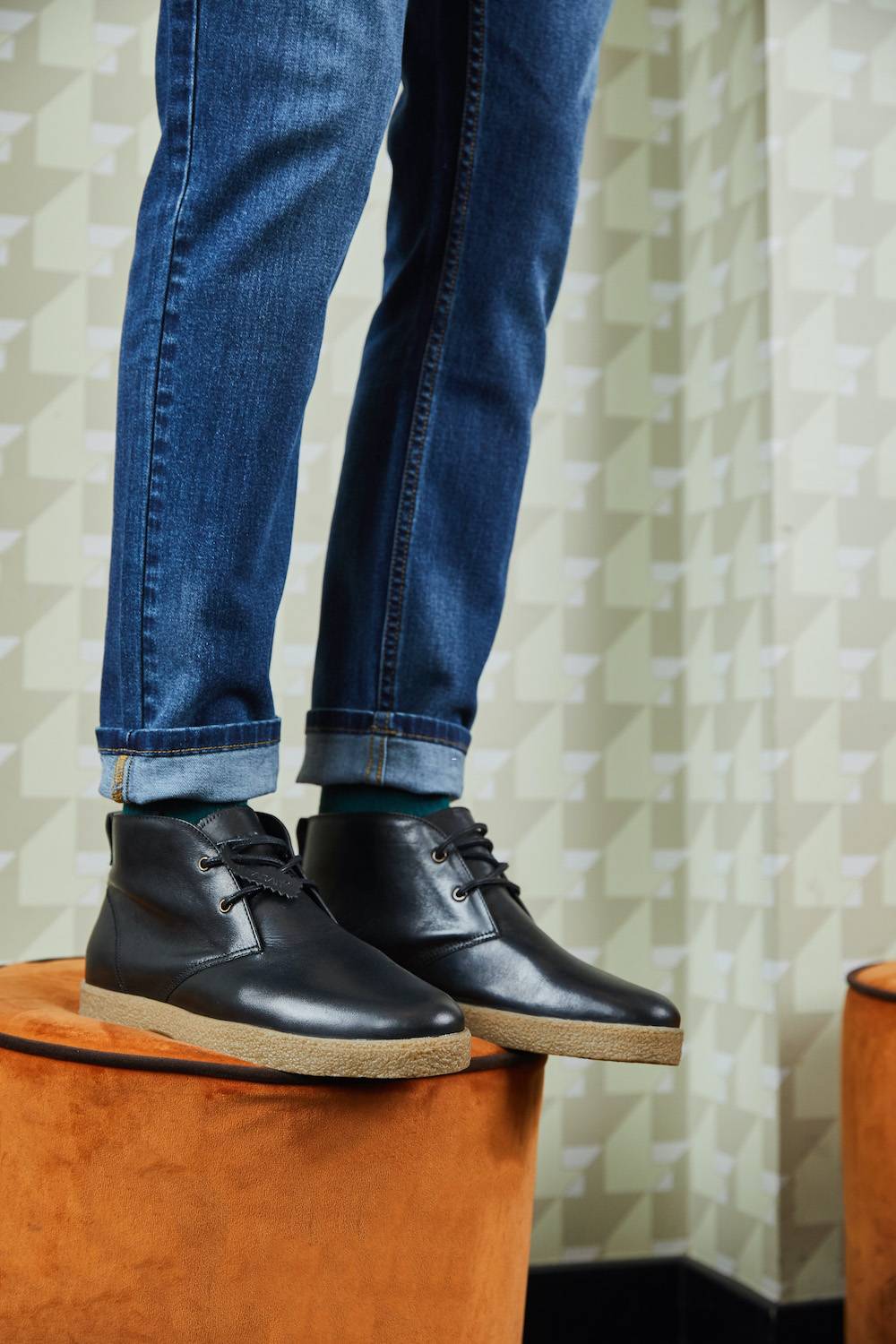 Despite slowly beginning to making its way into the UK in the 40’s, it wasn’t until the 1970s that Farah was wholly adopted internationally – such that for half a century now it’s come to be considered quintessentially British. Famous for its slim, sharp, hopsack canvas trousers, Farah played a key part in the style of Mods, Rude Boys, Casuals and the 90s’ indie music scene – each sub culture making our signature Farah F Tab its own.
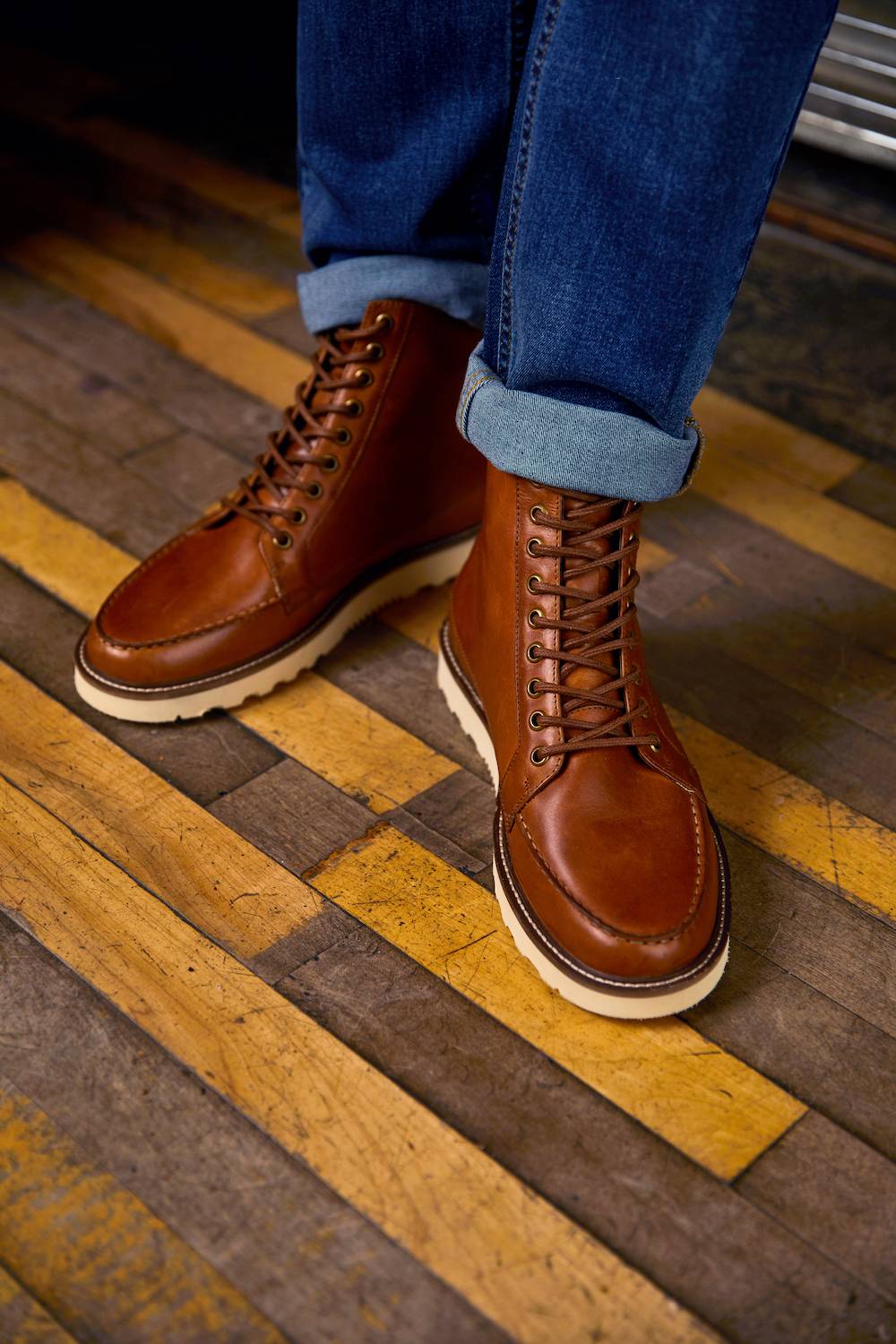 Fast forward to 2020, some 100 years since its launch Farah are about to launch their AW20 footwear collection and we are pleased to share with you the collection beforehand.
 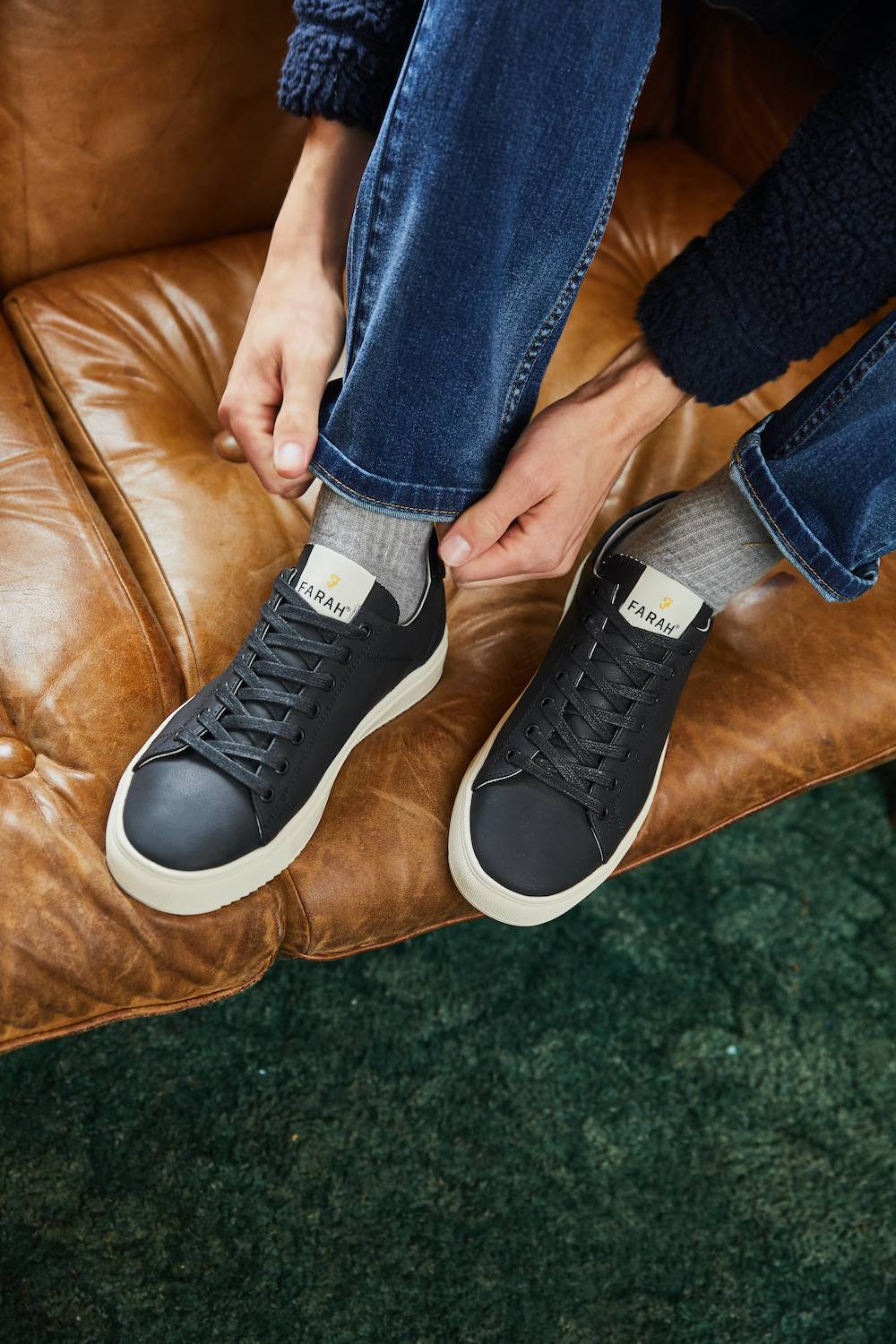 Farah’s footwear collection has been thoughtfully created with the brand ensuring that they are not only creating classic shoes but also trend-led pieces.