Enshittification: How the Internet We Loved Turned Against Us

There’s a new word doing the rounds, and it lands with the kind of blunt force that only the internet could produce: enshittification. Coined by technology writer Cory Doctorow(below) in his book of the same name, it describes the depressingly predictable lifecycle that transforms beloved digital platforms into hollowed-out, ad-choked, algorithm-obsessed shells of their former selves. It’s crude, yes. But it’s also clinically accurate.

You’ve felt it. The social platform that once connected you now buries your friends beneath sponsored content. The streaming service that promised everything now fragments its catalogue across paywalls. The dating app that once felt human now feels gamified to exhaustion. The e-commerce site that made discovery joyful now nudges you relentlessly towards promoted listings. This isn’t nostalgia talking. The services really are getting worse — by design.

According to Jamie Dobson, author of Visionaries, Rebels and Machines: The Story of Humanity’s Extraordinary Journey from Electrification to Cloudification, this decay follows a pattern. Platforms begin by serving users brilliantly to gain scale. Then they pivot to serve business customers and advertisers. Finally, they extract maximum value for shareholders — even if it degrades the experience for everyone else. It’s a four-stage descent, and once you see it, you can’t unsee it.

Social media is the cleanest case study. What started as frictionless connection became algorithmic manipulation optimised for engagement metrics. Streaming services followed suit, splintering content ecosystems in pursuit of subscriber growth at any cost. Dating apps turned intimacy into infinite scroll. Even e-commerce platforms — once engines of entrepreneurial opportunity — now prioritise those who pay to play.

The underlying driver is economic gravity. Venture capital demands growth; public markets demand returns. In highly concentrated markets with limited competition, platforms can afford to squeeze. Interoperability is blocked. Labour power is weakened. Users are locked in. And so the extraction begins.

But here’s the twist: enshittification isn’t inevitable. It’s a choice.

There are counterexamples — companies that have resisted the decay cycle by aligning long-term value with user trust. There are regulatory interventions that have worked, particularly where competition has been enforced or interoperability mandated. There are moments when even capitalism blinks and says, “This is too much,” usually when public backlash begins to threaten the bottom line.

Dobson argues that the next phase may be defined by user rebellion. When switching costs fall, when regulators intervene meaningfully, when workers regain leverage, and when alternative models prove viable, the cycle can be disrupted. The real power, as ever, sits at the intersection of incentives. Change the incentives and you change the outcome.

For over a decade, Dobson — founder of Container Solutions and author of The Cloud Native Attitude— has helped organisations move towards cloud-native ways of working. His latest book places today’s digital turbulence in a much longer arc, tracing the journey from electrification to cloudification and asking a harder question: what kind of technological future are we actually building?

Enshittification may be the word of the moment, but it’s also a warning. Platforms decay when extraction outweighs value. They degrade when growth becomes the only metric that matters. And they can improve again — but only if users, regulators, technologists and businesses decide that better is worth fighting for.



Spring, Styled Right: A Season of Effortless Dressing

Spring has arrived—and with it, that familiar shift in pace. Diaries begin to fill, weekends become less predictable, and the promise of longer, brighter days invites a more spontaneous approach to living (and dressing and going out).

From impromptu escapes to family gatherings and holiday meet-ups—punctuated, of course, by the welcome rhythm of Bank Holidays—this is a season defined by long warm nights, memory-making, and a certain relaxed optimism.

Naturally, it calls for a wardrobe that can keep up and see you through for every eventuality.

Enter La Redoute, whose latest arrivals strike that increasingly essential balance between style and practicality. This is clothing designed not for the static, overly curated moments of life, but for the in-between—the dash for a train, the quick change before heading out, the park bench pause in the afternoon sun.

It’s about effortlessly easy pieces that feel considered without appearing contrived. A return to laid-back staples that prioritise comfort but retain a sense of structure, while acknowledging the realities of unpredictable weather and even more unpredictable energy levels.

There’s a quiet confidence in dressing well for the everyday. Not overdressed, not underthought—just right. Because whether you’re packing a bag for a last-minute getaway, organising the logistics of holiday camps, or simply heading out for a day with no fixed agenda, what you wear shapes how you move through those moments.

And in spring, when everything feels just that bit lighter, that bit more open—getting dressed well becomes less about statement and more about ease.

Wherever the season takes you, consider this your reminder: style doesn’t need to be complicated to be impactful. Sometimes, it’s simply about choosing pieces that let you get on with the business of living.

10 great ways to exercise at home (that actually work)

Words by Clive Payne, Founder of TBKFiT

When done properly, home workouts can be just as effective, enjoyable, and sustainable as gym training. The key is not doing more but doing smarter. Creating a home routine that fits your space, goals, and lifestyle will always beat copying a gym programme that doesn’t translate to real life.

Here are ten practical, proven ways to exercise at home – including how to choose the right equipment, how to use your space, and how to stay consistent without burning out.

1. Use the space you have

One of the biggest mistakes people make is assuming they need a spare room or garage to work out. You don’t.

Before buying any equipment, stand in the space you already have—living room, bedroom, garden, even a hallway—and ask:

• Can I move my arms freely?

• Can I step forwards, backwards, and sideways?

• Can I jump or rotate safely?

That’s enough to start.

A clear 2m x 2m space is more than sufficient for most training styles, from strength work to boxing-inspired cardio. The goal isn’t perfection, it’s consistency.

Top tip: Choose a space that’s easy to access. If it takes effort to “set up” every time, you’ll train less often.

2. Build your routine around movement, not machines

Gyms are often built around machines. Homes shouldn’t be.

The most effective home workouts focus on fundamental movements: squatting; lunging; pushing; pulling; rotating; reacting. These movements build strength, coordination, balance, and fitness all at once – without heavy kit.

Bodyweight training, resistance bands, boxing-style drills, and functional circuits all work exceptionally well at home because they adapt to your ability and space.

3. Less is more

You don’t need a full gym setup. In fact, too much equipment can lead to confusion and clutter.

If I were starting from scratch, I’d prioritise a set of resistance bands, a mat, and one piece of dynamic or reactive equipment.

4. Create an “Exercise Trigger”

Motivation is unreliable. Environment is not.

One of the simplest tricks I recommend is creating an exercise trigger – something that cues your body to move.

Examples:

• Leaving your mat laid out

• Keeping gloves or bands visible

• Training at the same time each day

• Playing the same warm-up song

Over time, your brain links the trigger to action. This matters far more than willpower.

5. Use time-based workouts

At home, time-based training often works better than counting reps.

Instead of “3 sets of 12 squats”, try “40 seconds of squats, 20 seconds rest”.

This keeps intensity high, simplifies tracking, and adapts naturally to different fitness levels.

Time-based circuits are especially effective for fat loss, cardiovascular fitness, and busy schedules. They also make mixed workouts easier – combining strength, boxing, coordination, and core work in one session.

6. Add reactive or boxing-style training

One area many home workouts miss is reaction and coordination.

Static exercises build strength, but reactive training challenges the nervous system – improving speed, balance, timing, and mental engagement.

This is where boxing-inspired systems, reflex drills, or multi-target equipment can be extremely valuable.

Benefits include:

• Higher calorie burn

• Improved focus

• Reduced boredom

• Full-body engagement

Importantly, this style of training doesn’t require you to “be a boxer” – it’s about movement, not fighting.

7. Don’t ignore recovery

When you train at home, it’s easy to overdo it – especially if you’re squeezing in workouts between work and family life.

Recovery matters just as much as effort. Make time formobility work, stretching, low-intensity sessions, and at least one full rest day per week.

Short mobility sessions (10–15 minutes) can dramatically improve how your body feels and performs.

8. Mix Cardio and Strength in the same session

You don’t need separate “cardio days” and “weights days” at home. Combining both is often more practical and effective.For example: squats plus punches; lunges plus rotational movements; core work plus footwork drills. This keeps sessions efficient, maintains heart rate, and improves real-world fitness.

9. Track effort, not just outcomes

Instead of obsessing over scales or mirrors, track sessions completed, time trained per week, energy levels, and consistency streaks. These indicators are far more motivating and sustainable.

At home, success comes not from chasing perfection but from showing up regularly.

10. Make it enjoyable

Keeping things enjoyable might be the most important point of all. If you dread your workouts, you won’t stick to them.Experiment with music, different training styles, short sessions, new equipment, and boxing, circuits, mobility, or HIIT.

Your routine should evolve with you. What matters is finding movement you want to return to. Remember home exercise doesn’t have to be a compromise. When done right, it can be flexible, effective, and genuinely enjoyable. You don’t need a huge space, expensive machines, or endless motivation. You need smart choices, simple structure, and tools that work with your life not against.

WNTD: Making your Daily Outfit Decision Easy

The way we shop has quietly, but fundamentally, changed. Not in the obvious sense—yes, we buy more online—but in the less visible mechanics of decision-making. The modern wardrobe is no longer built in-store or even on a single website. It’s assembled across screenshots, group chats, saved posts and half-forgotten tabs.
WNTD, a new AI-powered fashion platform launching this April, is built with that reality in mind.

Pronounced “Wanted,” the app positions itself not as a retailer, but as the connective tissue between inspiration and purchase. It reflects a simple truth: people don’t shop in straight lines anymore. They scroll, save, compare, ask for opinions, hesitate, and often abandon altogether. According to recent data, over 70% of Gen Z discover fashion via social platforms rather than retail sites—a shift that has left traditional shopping experiences feeling increasingly out of step.

WNTD’s proposition is to bring this fragmented behaviour into one coherent system.
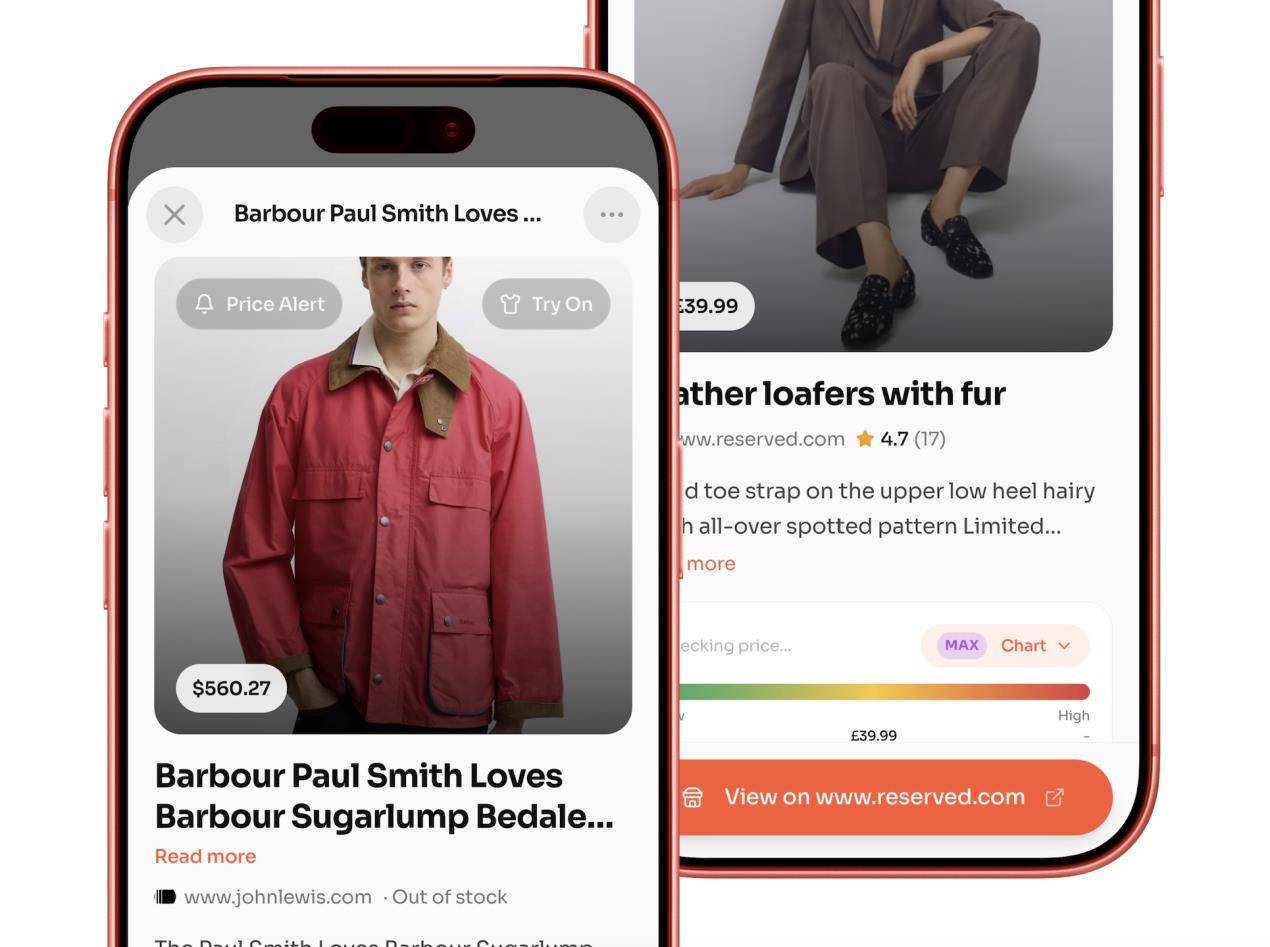
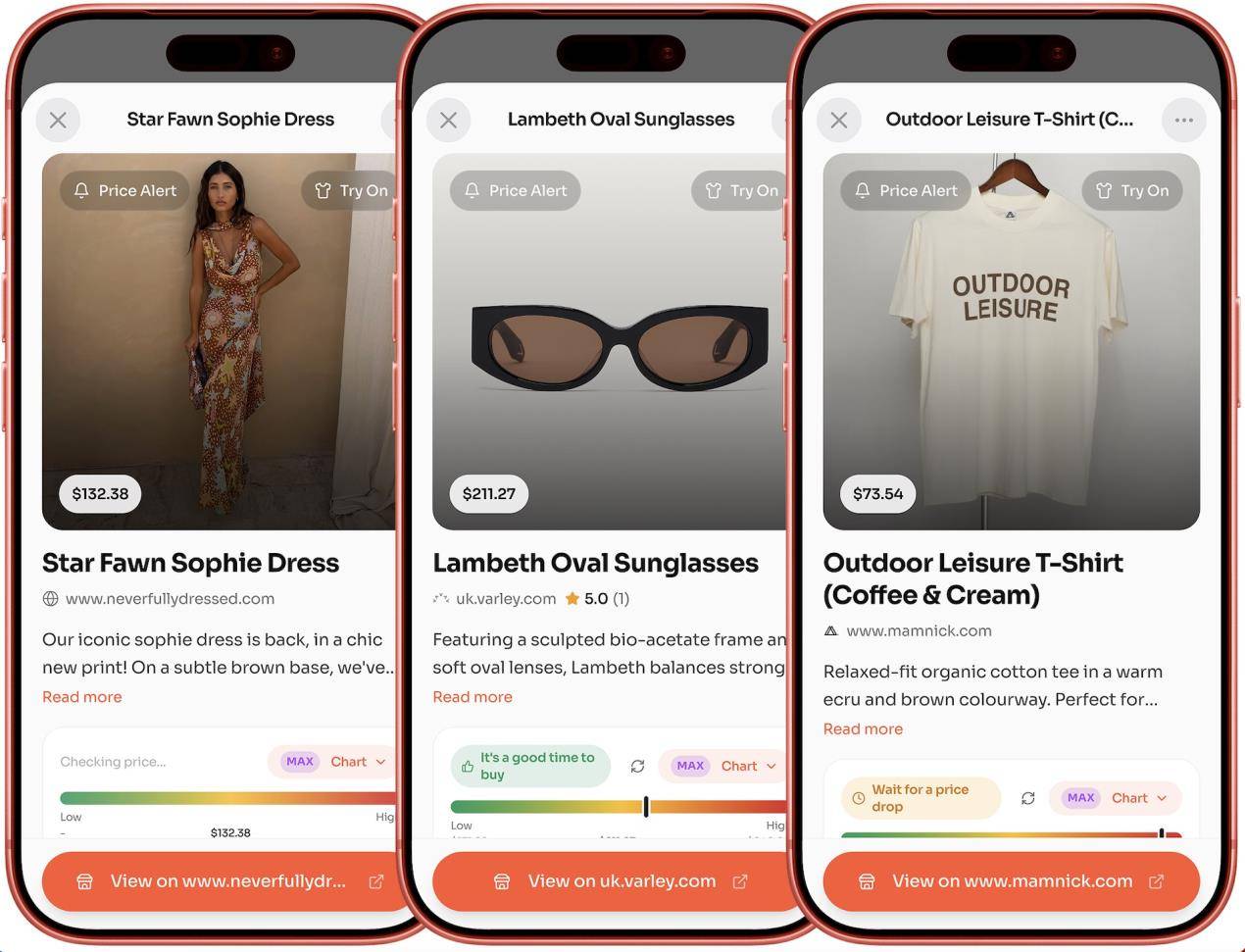
At its core, the platform allows users to capture inspiration from anywhere—Instagram, a website, or even something spotted on the street—and immediately act on it. That might mean virtually trying on a piece, generating a full outfit through AI styling, or sending options to friends for instant feedback. The process is fluid, social, and, crucially, reflective of how decisions are actually made.
The technology itself is ambitious but deliberately practical. Virtual try-on tools allow users to see garments on their own likeness, while AI-driven styling suggests complete looks rather than isolated products. A built-in “Studio” feature pushes things further, enabling experimentation not just with outfits, but with broader aesthetic shifts—effectively treating personal style as something iterative rather than fixed.

There’s also a strong emphasis on timing and value. Smart pricing tracks fluctuations and alerts users when to buy, while a Safari extension integrates the experience directly into everyday browsing. See something, save it, assess it, try it on—without ever leaving the page. It’s a subtle but meaningful shift from passive browsing to active decision-making.
What makes WNTD particularly interesting is its acknowledgment of shopping as a social act. The inclusion of group chat-style feedback and community input mirrors the informal networks that already influence purchasing decisions. In this sense, the app doesn’t attempt to reinvent behaviour—it simply formalises it.

The project comes from entrepreneur Lex Deak, whose previous ventures sit at the intersection of consumer tech and commerce, alongside CMO Lee Lythe, whose background in media and brand strategy brings a broader cultural perspective. Together, they’re betting on a near-future where AI, social validation and commerce are not separate layers, but a single, continuous experience.
WNTD’s tagline, “See Yourself Differently,” feels apt. Not as a piece of marketing rhetoric, but as a reflection of where fashion is heading: away from static identity and towards something more fluid, more collaborative, and more responsive.
In an environment where inspiration is endless but decisions are harder than ever, that shift may be less about convenience—and more about confidence.

Perfect Imperfection: CAT x 424 Reframe Workwear for Now

CAT’s latest Catalyst content, featuring 424 founder Guillermo Andrade, lands with a quietly confident shift in tone—one that feels both timely and considered. Rooted in a design-led, workwear-inspired aesthetic, the piece delivers everything you’d expect from 424’s distinct visual language, while subtly recontextualising CAT’s heritage.

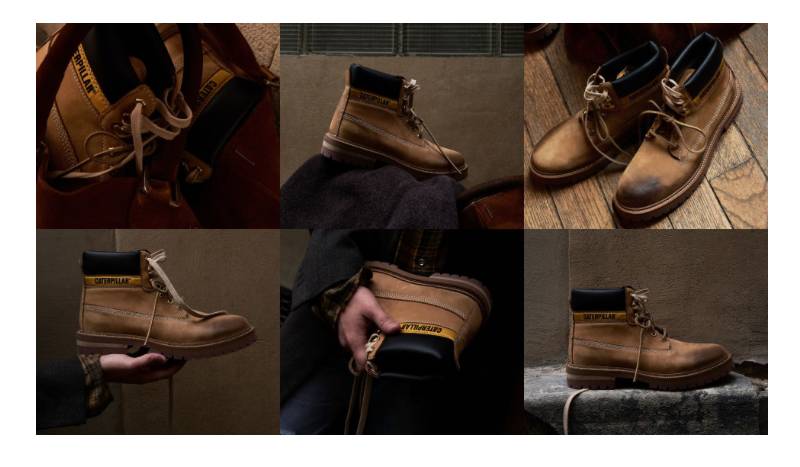
At the heart of the story is Andrade’s “perfect imperfection” philosophy, woven seamlessly through both narrative and imagery. Familiar CAT boot silhouettes are reimagined in an everyday, styled setting—less about rugged functionality in isolation, and more about how these pieces naturally integrate into contemporary wardrobes. It’s a nuanced pivot, but one that mirrors how utility dressing is evolving right now.

The styles themselves are uniquely personal—custom designs created by Andrade for the show rather than commercial releases. Still, they anchor around the Colorado silhouette, a choice that feels deliberate given its enduring relevance and recognisability within the CAT lineup.

Visually, the campaign leans clean and elevated, positioning itself firmly within a fashion context rather than traditional workwear territory. The result is a refined, culturally aware take on utility—one that speaks as much to style as it does to substance.