The Beautiful Star – agnès b. and Converse

This is an ephemeral collaboration not to be missed! Today, the unique French Fashion house, agnès b. and legendary footwear brand, Converse launch their first collaboration, with a limited edition iconic Converse Chuck Taylor All-Star model customized by agnès herself !

Iconic and timeless, the Converse Chuck Taylor All-Star was created over 100 years ago in 1917. Originally designed for basketball, they quickly became a symbol of youthful rebellion in the 1970s. Today, it’s a must-have for generations young and old alike adopting them for a wardrobe staple.

The timeless design of the All-Star resonates with the spirit of agnès b. which, since its beginnings in 1976, has created clothing and accessories designed to be durable and timeless, using quality materials.

The agnès b. x Converse model is available in two colours, navy blue or white. The upper of the shoe features the agnès b. logo. The laces are white or black, with a spare lace bearing ubiquitous the agnès b. logo.

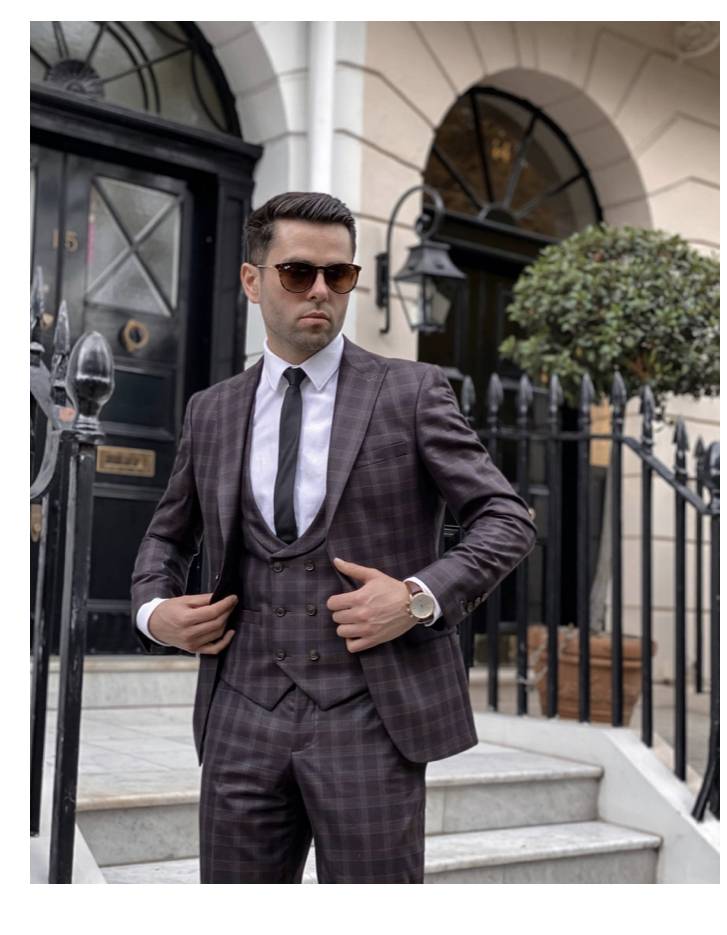
Designed for both men and women, this pair combines modernity and comfort and are the pair match for a suit or equally a pair of jeans. As the French say, “Dormir à la belle étoile.” Meaning Sleep under the stars and Ah! The beautiful star. Wear that star of Converse with style and pride !

The global pursuit of luxury: Revealing the most revered and popular brands worldwide

Research by Cross-Border Shopping Platform Ubuy analysed five different metrics including global searches, global website visits, social media following and engagement and revenue, to determine out of 100 of the most well-renowned and revered brands, which is the most popular.  


1 – Louis Vuitton 


Louis Vuitton is a renowned luxury fashion brand that epitomizes elegance, sophistication, and timeless style. Founded in 1854 by Louis Vuitton, the French company has since become synonymous with high-end fashion and accessories. Louis Vuitton has the most global monthly searches (8,330,000) and website visits (15,500,000). In 2022 Luis Vuitton alone did over £15 billion in sales. With a massive online following as well, Louis Vuitton cements itself as the most well-known and popular luxury brand globally.

2 – Dior 


Dior has become an icon in the fashion industry. Beyond its signature haute couture creations, the brand offers a wide range of products, including ready-to-wear clothing, accessories, fragrance, and cosmetics. Because of Dior’s broad range of products the company recorded the highest revenue of any of the luxury fashion brands making over £60 billion. Dior also has one of the highest monthly website visits (12,600,000) and has a huge online following with over 40,000,000 followers. 


3 – Gucci 


Established in Florence, Italy, in 1921 by Guccio Gucci, the brand has become a global symbol of elegance and sophistication. With its signature double G logo and bold, innovative designs, Gucci continues to captivate fashion enthusiasts around the world, setting trends and pushing boundaries in the industry. Gucci has the second-highest search volume (4,690,000 monthly searches), and over 9 million website visits every month.  


4 – Chanel 


Chanel is a renowned French fashion and luxury brand Founded by Coco Chanel in 1910. The brand quickly became synonymous with high fashion, introducing innovative designs and revolutionizing women’s clothing with its signature tweed suits, little black dresses, and quilted handbags. Chanel also has over 9 million website visits every month as well as the largest social media following with over 56 million followers. Chanel’s broad range of products also means the brand’s revenue streams are multiplied making them one of the most profitable with a revenue of over £12 billion. 


5 – Rolex 


Founded in 1905 by Hans Wilsdorf and Alfred Davis, Rolex has consistently pushed the boundaries of watchmaking, setting the industry standards for quality, reliability, and innovation. The brand’s iconic models, such as the Oyster Perpetual, Submariner, Daytona, and Datejust, have become synonymous with luxury and success. Rolex has been a popular brand for many years setting the standards for luxury watches. Rolex receives over 6 million monthly visits to its website and made over £7 billion in revenue in 2022. Rolex does have a slightly smaller online following with 14 million followers however has a better engagement rate than many brands with 0.50%  

6 – Versace 


Versace is an Italian luxury fashion brand known for its glamorous and opulent designs. Founded by Gianni Versace in 1978, the brand quickly gained global recognition thanks to its bold prints, vibrant colours, and daring styles. Versace’s creations often feature intricate detailing, Medusa head motifs, and a fusion of classical and modern influences. Versace is searched globally over 2 million times every month. Boasting just over 29 million followers, Versace also has strong engagement with 0.71%. The brands popularity is also shown through its sales with over £1 billion in revenue in 2022.


7 – Michael Kors 


Michael Kors is a renowned American fashion designer who has made a significant impact on the global fashion industry. Known for his luxurious and sophisticated designs, Kors has built a brand that exudes timeless elegance and modern style. Michael Kors is searched 2.8 million times every month and has over 9.8 million monthly website visits, while the brand’s revenue also exceeded £3 billion in 2022 establishing itself as a top 10 global brand.  


8 – Ralph Lauren  


Born in 1939, Lauren founded his eponymous brand, Ralph Lauren Corporation, in 1967. Ralph Lauren’s designs often blend classic elegance with a touch of American heritage, showcasing his love for timeless aesthetics and the pursuit of luxury. Ralph Lauren receives 10 million monthly visitors to its website and the brand made over £4 billion in 2022.  


9 – Prada 


Prada was established in 1913 by Mario Prada, and the company initially focused on producing leather goods and accessories. However, it has since expanded its offerings to include clothing, footwear, eyewear, and fragrances. Prada gets 2 million searches and 5.6 million website visits every month, and boasts a big online following of 32 million and in 2022 made 2.9 billion in revenue. 


10 – Coach


With a rich heritage dating back to 1941, Coach has become a symbol of American luxury and style. The brand offers a wide range of products, including handbags, accessories, footwear, and ready-to-wear clothing. Coach gets 9 million website visits every month and made over 5 billion in revenue in 2022 making them a global powerhouse of luxury fashion.  


A spokesperson from Ubuy.com commented: “The popularity of luxury fashion stems from a combination of factors that make it highly desirable. It represents exclusivity and craftsmanship, offering meticulously designed and impeccably crafted garments and accessories. The allure of luxury brands lies in their rich heritage, timeless elegance, and association with status and prestige. 

Celebrities, influencers, and high-profile individuals often showcase luxury fashion, creating a desire for consumers to emulate their style and sophistication. Furthermore, the rise of social media has significantly contributed to the popularity of luxury fashion, as it allows brands to reach a global audience and create a sense of aspiration among fashion-conscious consumers.”

The WORST books by football personalities from the past 10 years

Every year, several books are released exploring the stories and intricacies of football. And perhaps none are more eagerly awaited than titles written by players and managers themselves, both past and present. But, for every great there are numerous, not so.

Seatpick can reveal that the worst book by a football personality is How to Watch Football by Ruud Gullit. Released in 2016, the book sees the Dutch legend explain how to read the beautiful game, utilising knowledge he acquired as a player, manager and pundit. Though this is certainly an appealing synopsis for football fans, many reviewers on Amazon and Goodreads complain about the book being ‘uninformative’ and ‘uninteresting’, leaving Gullit’s insights with a disappointing final score of 3.84 out of 5.

The second-worst book according to the data is, surprisingly, the autobiography of one of football’s all-time greats. My Turn: The Autobiography, released in 2016, is the life story of Netherlands legend Johan Cruyff, considered by many to be the greatest player never to win a FIFA World Cup. Unfortunately, the book finishes with a low score of 3.93 out of 5, with readers complaining of certain sections being tedious and others somewhat arrogant.

In third place is Andrea Pirlo’s I Think Therefore I Play, released in 2013. The book finishes with a score of 4.01 out of 5, with many readers noting its short length and somewhat unoriginal content.

The two worst books, according to the data (How to Watch Football by Ruud Gullit and My Turn: The Autobiography by Johan Cruyff) are written by former Dutch players.

Both Jamie Redknapp and his father Harry make it into the top 10, with their books (Me, Family and the Making of a Footballer and The World According to Harry) scoring 4.37 and 4.36 out of 5 respectively.

Though Jamie Carragher’s book The Greatest Games: The Ultimate Book for Football Fans makes it into the top 10, with a score of 4.38 out of 5, other pundits’ works don’t fare quite so well. His longtime Sky Sports partner Gary Neville appears much further down on the list with his own solo book The People’s Game: A View from a Front Seat in Football, which scored 4.21 out of 5. The worst book by a regular pundit is Roy Keane’s The Second Half, with a score of 4.05 out of 5.

The WORST books by football personalities from the past 10 years

Rank Book Author/s Released Review score (/5)
1 How to Watch Football Ruud Gullit 2016 3.84
2 My Turn: The Autobiography Johan Cruyff 2016 3.93
3 I Think Therefore I Play Andrea Pirlo 2013 4.01
4 The Second Half Roy Keane 2014 4.05
5 My Autobiography Sir Alex Ferguson 2013 4.07
6 Forward: A Memoir Abby Wambach 2016 4.08
=7 Mourinho On Football José Mourinho 2013 4.10
=7 Adrenaline: My Untold Stories Zlatan Ibrahimović 2022 4.10
=9 #2Sides: My Autobiography Rio Ferdinand 2014 4.12
=9 Big Sam: My Autobiography Sam Allardyce 2015 4.12

*An ‘=’ indicates a joint ranking

Cheers to Charcoal – DryBar Shampoo & Conditioner

At Drybar, their philosophy is simple:
Focus on one thing and be the best at it.
With that purpose in mind,  they are focused on providing the best professional quality beauty products, tools, and services to create and maintain the all individual hair types.

On The Rocks Clarifying Charcoal Shampoo Activated charcoal removes impurities and product buildup without stripping or drying out hair.

Activated charcoal removes impurities and product buildup without stripping or drying out hair. Activated Charcoal purifies and deep-cleans hair and scalp (absorbs 100-200 times its weight in impurities) and Vegetable Protein strengthens and reinforces chemically treated or damaged hair.

The Noir scent and a key feature of the product with notes of ginger, mint, and sandalwood

Pair with On The Rocks Conditioner for a weekly replenishing treatment for an absolute dynamic duo. It this product it’s key ingredients are Coriander seals and smooths the hair cuticle to boost shine and Macadamia Nut Oil provides lightweight hydration while detangling and reducing frizz.

They are completely Cruelty-free and has no animal testing. Ohhh did I mention great for all hair types and if that wasn’t enough they are Paraben Free, Sulfate Free, Phthalate Free, Honey Free (protective of the bees and for Vegans).

Ideas to help you improve your ability to think creatively

Words by Chris Thomason, Author of ‘Freaky Thinking; Thinking that delivers a dazzling difference’

 When we were little kids, creative thinking wasn’t an issue. A loo roll cardboard tube was a pirate spyglass, or a trumpet, or a false nose, or a tunnel for toy cars. But the chances are, when you look at the inside of a loo roll now, all you see is recycling. As life becomes more serious, creative thinking can be trickier to tap into.

But we can train ourselves to be better creative thinkers. Chris Thomason is the author of Freaky Thinking, a process that helps individuals in organisations to think differently about important topics and issues. Chris is founder of Ingenious Growth which helps organisations change their thinking to boost innovation, productivity, profits and most importantly, staff satisfaction. After buying a failing manufacturing company and turning it into one of the largest in its sector, Chris now teaches the innovative ways of thinking that lead to his business success. Chris is author of eight business books including The Idea Generator, Freaky Thinking, and Excellence in Freaky Thinking. Chris’s clients include UPS, Canon, O2, Vodafone, Roche Pharmaceuticals, Touchnote, Lloyds Bank, Toyota, HSBC, Scottish Widows, South African Airways, American Express, and many more.

Here are a few tips based on Freaky Thinking, a process that boosts a person’s preferred way of thinking to help the creative process become second nature.


1. Find a repeatable process

It would be brilliant if great thinking and new ideas just happened – but they don’t. You must actively work your imagination to force useful, creative thoughts out. And to do this, you need a process that not only works well for you but is also easily repeatable and permits flexibility. Without a process, you only have a semi-random set of events, which makes it harder to monitor if you are being successful or not. Committing to finding that process is the first step.


2. Find where you think best

Creative thinking can take place anywhere, at any time, but some places and times are better than others. One of the most challenging locations is at a desk or table with a notepad and pen in front of you. Research has proven that performing some kind of undemanding task produces better thinking. This could be walking the dog, washing dishes, even taking a bath or shower. It needs to be a light activity that doesn’t occupy you completely. Try out different activities to find your personal sweet spot.


3. Find when you think best

Roald Dahl wrote for two hours in the morning, and two hours in the afternoon, with a very, very long lunch break in between. When writing Harry Potter, JK Rowling would write from 9am to 3pm. There are morning people and there are evening people (and there was Franz Kafka who would do his best writing from 11pm through the night to 6am). Finding the best time for you is key to accessing your most creative thinking. There’s no point trying to do good thinking when you’re feeling tired (no matter how much you may admire Kafka). If you want to do powerful thinking, save it for the time of day when you believe you are at your most creative.

4. Recognise that your optimal time is precious

If you want to do your best thinking, try to combine your optimal time and place together. If it’s in the morning rather than in the evening, and walking the dog is a useful activity, then volunteer to take the early shift. Book this peak-thinking time in your calendar each day and use it as your thinking self-development time. Re-organise, schedule, or negotiate as appropriate to ensure you have regular access to your best creative thinking time/activity.


5. Choose where to focus

You need to have a focus for your thinking on the topic you want to address. This is called your killer question. This is an important, enduring question that hasn’t yet been answered well enough, and which will deliver significant value for you. If a killer question is too big and over-encompassing to be tackled in one go, chunk it down into component parts, and think about these individually. When you have ideas that address each part, integrate them together to form overall solutions to your killer question.


6. Incubate your ideas for later 

Everyone will have experienced the situation where a small fact or detail can’t be recalled, like the title of a song or the name of someone you used to live next door to. Frequently, when we give up and forget about remembering the detail, after a time (could be minutes or hours), the answer suddenly comes to us unbidden. This is our subconscious mind working on our unresolved issue in the background.


A similar thing happens when you are working on a killer question. Even when you’re not actively thinking about the topic, your subconscious is working on it for you. Each time you come back to the question or task, your subconscious has advanced your thinking by finding a new perspective to consider, or reinterpreting an element of it in some way. Each gap in your thinking encourages subconscious incubation – use this to great effect on your issue (Roald Dahl’s long lunch breaks likely did more than fill his tummy).


7. Find your Win Quicklies

Win Quicklies are ideas—or elements of your bigger idea—that can swiftly test or prove an interesting part of your solution. A win quickly can be a useful proof that something much larger has the potential for success and value. It may be the case that a number of Win Quicklies are actually more beneficial that implementing one bigger, slower-moving project. But even when that’s not the case, nothing boosts our confidence more than seeing one of our ideas delivering value.


8. Remember how to eat an elephant – one bite at a time

In Mark Manson’s book Will, actor Will Smith credits his success as a Hollywood superstar to lessons from his father, who told him and his brother to build a long brick wall. His father said, “There is no wall. There are only bricks. Your job is to lay this brick perfectly. Then move on to the next brick. Then lay that brick perfectly. Then the next one. Don’t be worrying about no wall. Your only concern is one brick.” Your thinking exercises will be far more exciting than laying bricks, yet the same principle applies. Consistency of use will eventually build your wall of success. Just take it one brick at a time.

9. Boost creative confidence

Recipes for success can vary—different people need different ingredients—but a common component is a belief in our ability to attain a desired level of performance, and in relation to creative thinking, this is often referred to as creative confidence. The greater the creative confidence, the easier it is to learn and perform a new task, and the easier it is to persevere through to success. The more we apply our thinking process, the better results we achieve, which makes us more confident to pose harder killer questions. This, in turn, requires us to apply the process more-effectively which helps us achieve better outcomes, and so the cycle goes on indefinitely.


10. Choose excellence situations

While athletes do continuous fitness training, they don’t try to break their personal best record every day. They only attempt this on specific, optimal occasions – and it’s a similar situation with our creative thinking. Decide which issues you face that are worthy of additional thinking effort and time to push out some exceptional new ideas. You can’t be excellent all the time, so choose the situations or occasions where you want to excel.